Compiled By
As the United States enters its presidential election year and public transit agencies from coast to coast continue plans for expanding passenger-rail services in 2020, agency leaders remain hopeful that investment in the nation’s infrastructure will stand out as a top priority.
While transit leaders push forward with rail projects and remain committed to state-of-good repair efforts, some also face workforce recruitment and retainment challenges.
On the following pages, seven transit agency leaders share their thoughts about challenges and opportunities in the year ahead. They are Jim Derwinski, executive director and chief executive officer of Metra; Nuria Fernandez, CEO and general manager of the Santa Clara Valley Transportation Authority (VTA); Stephen Gardner, senior executive vice president and chief operating and commerical officer of Amtrak; David Genova, GM and CEO of the Regional Transportation District of Denver (RTD); Robert Powers, GM of Bay Area Rapid Transit (BART); Scott Smith, CEO of Valley Metro; and Phillip Washington, CEO of the Los Angeles County Metropolitan Transportation Authority (LA Metro).
What will be your agency’s biggest challenges in 2020, and how will you address them?
Derwinski: Our biggest challenge is the implementation of the positive train control (PTC) safety system by the federal deadline of Dec. 31, 2020. Metra’s commuter service operates in the most complicated rail environment in the nation, and for that reason, interoperability is a major issue. Metra has been working closely with its freight partners and Wabtec Corp. to keep this project on schedule, and we are confident we will meet this challenge and make the deadline.
Fernandez: As we move into 2020, the Santa Clara VTA is taking on major initiatives and projects that will change the face of transit in Silicon Valley. Our new transit service plan, which takes effect at the end of 2019, is the most significant transformation of bus and rail service in agency history. When the first phase of the BART Silicon Valley extension opens in 2020, we will be ready to transfer tens of thousands of new passengers commuting to Santa Clara County, [California], via BART through extended and frequent service on both VTA bus and light rail throughout Silicon Valley. We have rearranged our service plan to serve more people more frequently, and to connect to the BART service coming to two stations in Santa Clara County next year. The second phase of the BART Silicon Valley Extension, adding four more stations with a 5-mile underground section of the alignment, moves forward after the Federal Transit Administration awarded a commitment of $125 million in funding through it’s Expedited Project Delivery pilot program. One of the most innovative features of VTA’s BART Phase II Project will be the single-bore tunnel that holds the trackways and passenger boarding platforms. While the single bore tunneling method has often been used in roadway projects, this will be the first use for transit in the Western Hemisphere.
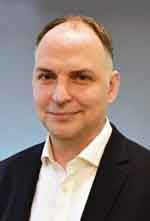
Stephen Gardner
Gardner: We want to grow our revenue by 4.1 percent, our ridership by 2.9 percent, and improve our customer satisfaction. We have three major planks we will use to drive this performance: technology transformation, station transformations and onboard transformation.
Genova: Like peer agencies around the world, RTD is experiencing an operator shortage. One of the proposals being considered is a temporary service reduction to bring relief to our operators, many of whom are required to work six-day weeks, and to provide the public with a level of service we are confident we can deliver. We will also be opening the N Line, which will serve our north metro area. While we have operated light rail for more than 25 years, this will be the first time we operate a commuter-rail line. Our other three commuter-rail lines are operated by a contractor. Currently, we are testing, staffing and training for the line’s opening, using the lessons we learned from implementing positive train control from the ground up on our other lines and applying them to the N Line.
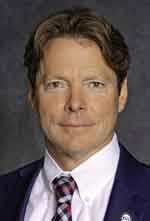
Robert Powers
Powers: We are going to build on our initial progress in replacing critical infrastructure to ensure BART is in a state of good repair. Thanks to Measure RR, a $3.5 billion bond measure approved by Bay Area voters in 2016, we’ve been able to address some of our most critical rebuilding needs. This includes replacing track components in key parts of the system that in many cases had been in use since we first opened service in 1972. We’re renewing dozens of miles of track, activating new power substations, replacing electrical conduit, installing new platform edge tiles, and much more. Improving safety on the BART system is another high priority. I’m supporting the BART Police Department’s aggressive recruiting campaign. Our plan is to add 94 officers over the coming five years. We’re also moving forward with station hardening across the BART system. We’re raising barriers, fencing in vulnerable elevators and taking initial steps toward replacing all our entry gates to combat fare evasion. This combined approach of boosting the visible presence of our police officers and hardening stations will be a powerful deterrent against criminal activity.
Smith: We are starting construction on two major light-rail projects in 2020. In this environment, maintaining cost, schedules and scope will be more challenging than ever. We must make sure that we have the best people empowered to manage these projects proficiently and effectively. At the same time, we must continue to safely and efficiently operate our transit systems to support the thousands of riders that rely upon them for daily travel.
Washington: One of our most daunting challenges involves our workforce. The LA Metro is experiencing the same workforce shortage that the entire infrastructure industry is facing. There is a dearth of skilled infrastructure professionals that we desperately need to build and operate our system. In LA County, and in cities around the country, a thriving economy has led to a construction boom of epic proportions. Every engineering and construction company is hiring, but there’s nobody left to hire. The demand for workers is far exceeding the supply. And when demand exceeds supply, prices (read: project costs) go up. So as LA Metro seeks to build out the largest public works program in America, we have to compete to hire talented workers. Adding to this challenge is the fact that half of all LA Metro employees will be eligible for retirement over the next four to five years. A similar “silver tsunami” is about to hit the transportation infrastructure industry nationwide. So, the demand for a skilled workforce has never been higher, but the supply is shrinking. We see no signs of the economy cooling, so we expect this challenge to persist well into 2020 and beyond.
What are some of your priorities for your agency in 2020?
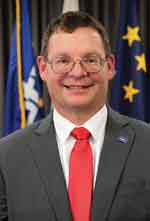
Jim Derwinski
Derwinski: Our State Legislature just passed the largest capital program for infrastructure needs across Illinois in a decade. Metra expects to receive more than $1.4 billion from Illinois over the next five years. And when you add the state capital funding to projected federal and local capital funding sources, Metra expects to spend nearly $2.6 billion over the next five years on capital improvements — an unprecedented amount.
Our focus in 2020 is to begin putting these funds to use to restore our system’s infrastructure. Our plan is not just to replace our aging equipment with the same style of rail cars that we’ve been using for nearly 70 years, but to focus on a newer design that will allow us to increase capacity and passenger amenities. To improve our system’s reliability, we also plan to use these capital dollars to replace locomotives that are more than 40 years old. We plan to purchase more remanufactured locomotives that are more fuel efficient and environmentally friendly, and we will explore the feasibility of purchasing alternative fuel locomotives. Next on our list of priorities is to make improvements to the other part of our system that most influences our customers’ experience — our stations. We have a lot of changes planned that will make our stations more inviting and safer. But our highest priority has to be making them all ADA accessible. We also plan multiple projects to replace existing platforms and rehabilitate depots. Lastly, more than half of the 847 bridges on the Metra system are more than 100 years old. Replacing them — as well as replacing railroad ties, worn switches and sections of track — isn’t very sexy or exciting, but it’s absolutely critical to our ability to provide a safe commute with minimal delays. Thanks to the new state capital program, we are able to look to innovative solutions to the challenges we face, and develop a plan to improve the customer’s experience from start to finish. While the funding we received does not solve all of our problems, we’re finally on a path to sustainable transit.
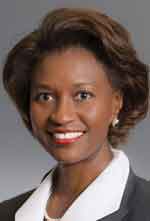
Nuria Fernandez
Fernandez: In addition to welcoming BART service to Santa Clara Valley, our top priority is creating excellent customer service not only through communications but by maintaining frequent, on-time, reliable service with broad notifications and communications via multiple platforms so our customers continue to be updated at all times. Our customer service extends to rider experience with operators, fare inspectors and even security officers on our system. VTA will elevate the role of our customer service experience through hiring and training of specialists in rider experience and customer satisfaction. We will develop and deploy a strategy that uses customers’ feedback to better predict and influence mobility decisions. We see that the public’s choice of mobility is being determined by “time and availability” of options to get from where they are to where they want to go. As the Congestion Management Agency for Santa Clara County, VTA will act as the mobility integrator to work with rideshare, microtransit and other transportation options to provide first/last mile services. We will grow our joint workforce investment mentoring and training program bringing labor and management together to identify and implement solutions that upskill, reskill and build the knowledge and capabilities of our operators and maintenance workers to meet the needs of the future.
Gardner: We have a clear roadmap for fiscal-year 2020, and it’s set around four critical ideas that are central to our planning efforts, including: our missions and goals given to us by Congress; our operating pillars, which define our strategic areas of focus; our annual operating plan, which defines our goals; and our values, which help set expectations for how all Amtrak employees should interact with our customers and each other.
Powers: My No. 1 commitment as general manager is to ensure that our riders come first, and our employees have the tools they need to get the job done. To back that up, I launched a public listening tour. I’ve been hearing directly from both our riders and employees. I’ve visited stations and operations yards throughout the system. It’s essential that the riding public and our employees have a stake in our progress as we continue on the path toward truly becoming a world class transit system. I’m especially mindful that I accepted the general manager position during a critical point in BART’s history, with our customer satisfaction rate lower than I find acceptable. We must do better. BART’s importance to the region cannot be overstated. The Bay Area’s economy and ability to move relies on our system to perform at optimal levels. BART also has a leadership role to play in addressing the region’s housing crisis. New laws give us a seat at the table for shaping the intersection of transportation and land use. I plan to work collaboratively with our regional partners to realize a future of seamless mobility. We must make taking transit easy and enjoyable. If we do that, the customer satisfaction numbers will go up.
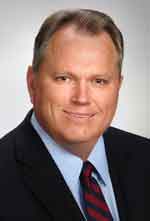
Scott Smith
Smith: First of all, building upon the success we’ve enjoyed recently, including the public’s reaffirmation of light -rail expansion with the vote last August. This is the fourth time Phoenix voters told us that they want light rail in our region. We will work hard to continue to earn the public’s trust in the way we operate our services and manage finances.
Washington: 2020 is shaping up to be a pivotal year for LA Metro, and for my tenure as CEO. We’re trying to secure a P3 to accelerate one of the biggest transportation projects on the West Coast, the Sepulveda Corridor transit project. Some have called this the most ambitious infrastructure project since the Hoover Dam. It has the potential to greatly alleviate one of the worst traffic bottlenecks in the country, the crowded I-405 corridor in western Los Angeles County. LA Metro is also gearing up to launch gender and racial equity action plans, open the Crenshaw/LAX rail line and break ground on our SEED Transportation School of LA.
What are your concerns and/or hopes for the presidential election in late 2020?
Fernandez: Mobility is a necessity no matter who is in the White House. VTA will continue to work with our federal, state and local elected officials to drive home the importance of public transportation as the backbone of mobility for our economies, and our communities to thrive and succeed.
Gardner: Any administration, current or future, will need to seriously consider how to address our nation’s infrastructure, transportation and environmental challenges, and we hope Amtrak and intercity passenger rail will be an integral part of this discussion. These challenges are not going away; in fact, they will only get worse if government and industry do not take action to address them head on. Amtrak can play a pivotal role as part of a modern transportation network.
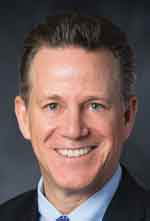
David Genova
Genova: We look forward to maintaining good relationships with our federal partners. The relationships we have built over time are non-partisan, and we hope to collaborate with any administration that is in office and to seize infrastructure funding opportunities that might arise.
Powers: My biggest hope is that infrastructure is made a top priority by both President Trump and the Democratic nominee. Infrastructure was not made a high priority during 2016, but we really need these candidates to not only talk about the need but to also develop policy packages and propose real options to pay for them.
Smith: The winner of the 2020 presidential election should recognize the need for real multimodal transportation systems across the country and commit to adequately funding them. That also includes the importance of maintenance and expansion costs so that we can meet the travel needs of current and future generations.
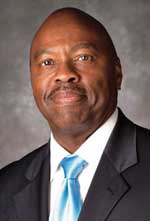
Phillip Washington
Washington: With respect to the 2020 presidential election, I believe it is both vital and prudent for us — as transportation stakeholders and advocates — to take a 30,000-foot view of our nation’s political landscape as it relates to mobility in America today. First, it is imperative that we — as leaders in the transportation sector — make a fact-based case to all those seeking election or reelection to the White House that a pro-mobility agenda is not only good policy, but also good politics. Good policy and good politics not just in blue states, but in red states and purple states — by that I mean swing states. I believe the American people, without regard to political affiliation, are hungry for someone to tell them the truth about our infrastructure and the tough steps we need to take to fix our infrastructure — like raising the gas tax. It is my hope that during the 2020 presidential campaign and during the 460 congressional campaigns which will be held next year that our nation will have a big conversation about transportation. I remain optimistic that we can summon the leadership that several past U.S. presidents and Congress have shown — and set America on a strong path to Rebuild America.
What do you consider to be your legislative or government oversight priorities for 2020?
Fernandez: Our primary focus for 2020 will be on the reauthorization of the Fixing America’s Surface Transportation (FAST) Act. We will work together with the American Public Transportation Association to secure the highest levels of federal surface transportation funds. While working to preserve and possibly increase Capital Investment Grant funding, we are actively participating in the Expedited Project Delivery program at FTA for VTA’s Extension of BART to Silicon Valley. In California, we are participating in an industry-wide task force to reform the Transportation Development Act.
Gardner: For Congress to continue to fund Amtrak and intercity passenger rail at increased funding levels to permit network and service expansion, infrastructure renewal and modernization of our fleet. [And,] for Congress to begin the process of reauthorizing surface transportation legislation, including intercity passenger rail, to ensure the right programs and policies are in place to support a modern and improved rail network for the future.
Genova: It is important to us that a surface transportation bill be reauthorized with additional funding for transit projects.
Powers: Congress will need to reauthorize the FAST Act, which is set to expire on Sept. 30, 2020. I am focused on supporting a long term bill (five to six years) so we have funding certainty. In addition, I am supporting increases in funding for both state-of-good repair and capital investment grants in a new surface transportation authorization bill. Not only do we need to address the needs in our core system that have been neglected for far too long, but we also need to address capacity and connectivity issues.
Smith: Surface transportation reauthorization is a top priority. More flexibility to explore different funding construction methods and programs that can help us better manage cost and efficiency.
Washington: My goal for 2020 is to advance my Rebuilding America initiative, which is endorsed by the LA Metro Board of Directors and sets forth five key goals for Congress and the Trump administration to adopt in order to strengthen federal transportation programs.
Email questions or comments to